Anatomical Terminology
- Practical Names: Anatomical structures are named according to the qualities like
- Function (Extensor, Flexor, levator)
- Position relative to other similar structures (superficial, deep)
- Location: (Infraorbital muscle)
- Appearance or form: greater curvature of the stomach
- Eponymous names: relate the structure to a person ex. Foramen of Monro
The common language of Anatomy
- to remove confusion, internationally agreed on vocabulary – Nomina Anatomica Veterinaria (NAV), 1968 and revised regularly.
- Separate but similar vocabulary for birds.. Nomina Anatomica Avium
- Anatomic directional terminology
- Anatomic position and planes
- Terms describing anatomic movements
Anatomic directional terms
- Anatomical directional terms are used to describe relative position consistently within a cadaver, independent of how the cadaver is oriented.
- Terms come in pairs of opposites.
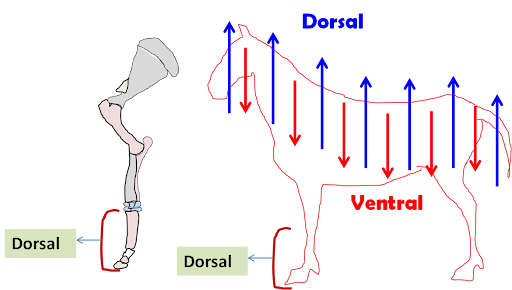
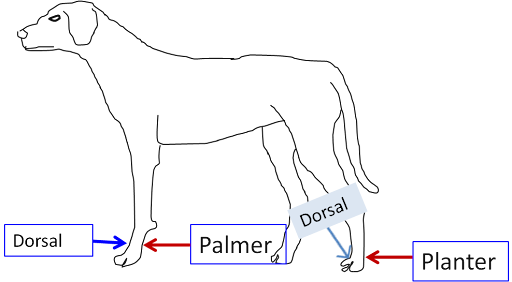
Dorsal: structures lie away from ground (directed toward the back (vertebral column) and corresponding surface of head, neck and tail. For limbs, the term applies to the front or upper surface of each limb distal from the carpus or tarsus.
Ventral: structures lie towards the ground (directed toward the belly) or lower most surface of any body surface, except the limbs.
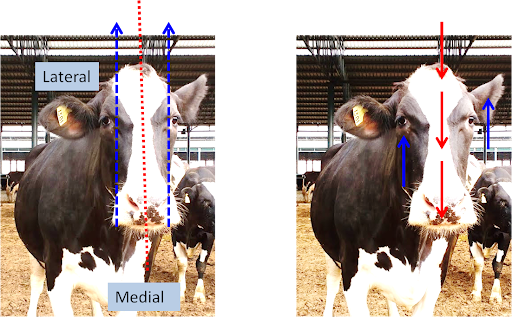
Medial/Lateral:
Medial-- directed toward the midline (median plane)
Lateral-- directed away from the midline, toward the side.
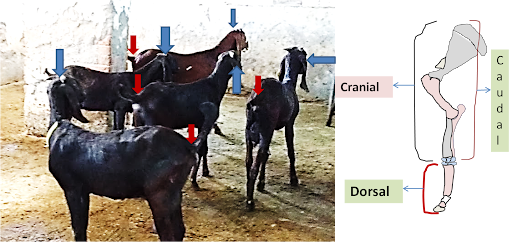
Cranial/Caudal:
- Cranial : structures lie towards head (cranium)
- For limbs: the forward surface of each limb as far distally as carpus or tarsus
- Caudal : structures lie towards tail (cauda)
- For limbs: the rear surface of each limb as far distally as carpus or tarsus
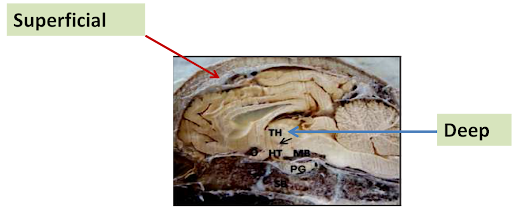
Superficial vs Deep
Superficial: Closer to the external body surface
Deep: Closer to the centre of the body, away from the surface
Peripheral : distant from the point of origin
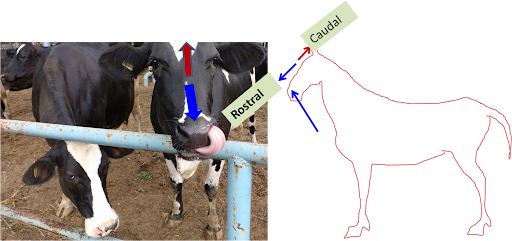
Rostral -- directed toward the nose (used to describe structures on the head)
Caudal -- used to describe structures away from the nose, towards the occiput (used to describe structures on the head)
-
 Palmar: surface below the proximal ends of the carpus in the forelimb (directed toward the ground surface of the manus)
 Plantar: surface below the proximal ends of the tarsus in the hind limb (directed toward the ground surface of the pes).
Proximal/Distal:
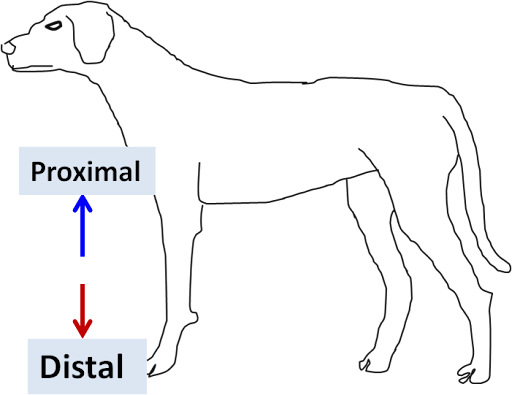
Proximal-- directed toward the torso (trunk) or nearer the main mass or origin of a structure
For Limbs: nearer to the body or attached end.
Distal -- directed away from the torso (trunk) or away from the main mass or origin of a structure
For Limbs: farther from the body, the free end
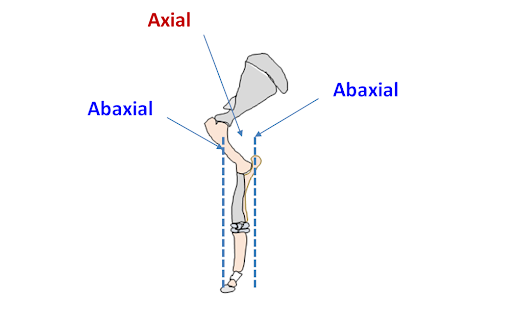
Axial or Adaxial vs Abaxial:
Axial or Adaxial: directed toward the longitudinal central axis of a limb.
Abaxial: directed away from the longitudinal central axis of a limb.
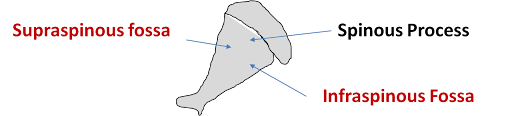
Supra vs Infra
Supra : structures lie prefix signifying above or over
Infra : structures lie prefix signifying below or beneath
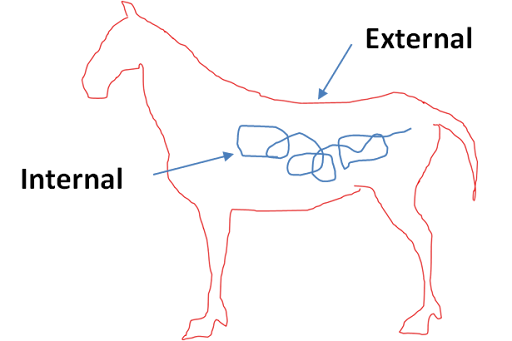
External vs Internal
External: structures lie closer to outer surface
Internal : structures lie closer to centre of body
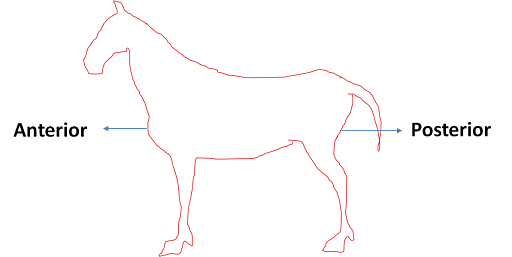
Anterior vs Posterior
Anterior: Structures near the head
Posterior : Structures away from the head and towards Restricted use in veterinary medicine, mostly for eyeball